
Real-Time Market Analysis
Continuously monitors multiple markets and instruments, surfacing conditions as they develop instead of long after the fact.
Advertorial / Sponsored Content
An independent, educational guide to AI-powered trading platforms for Canadian investors. We explain how automated systems read market data, how AI-assisted tools differ from traditional investing, and the real risks involved — in plain language, with no hype.
2.37x
A hypothetical illustration of how disciplined, rules-based execution might compound over time. It is not a forecast, a promise or a past result.
All trading involves risk, including the possible loss of your entire investment. Figures shown are for illustration only.
Risk warning: Trading and investing involve substantial risk, including the possible loss of your entire investment. Past performance does not guarantee future results. This content is educational only and is not financial advice.
Modern markets generate an overwhelming stream of information — price ticks, order-book depth, economic releases, sentiment and breaking news — far more than any individual can monitor in real time. AI-powered trading platforms add a new intelligence layer on top of that noise, using machine-learning models to ingest, structure and analyse market data continuously, day and night.
“Some systems are designed to evaluate thousands of data points every second.”
Rather than reacting emotionally to a single headline, these systems search for statistical patterns and relationships across many instruments at once. They can flag potential opportunities, measure risk exposure and surface signals a human might overlook — though a signal is never a guarantee of any outcome.
For Canadian investors, understanding this layer matters. Knowing what the technology can and cannot do is the first step toward evaluating any platform critically — and asking the right questions about data, fees and oversight before committing a single dollar.
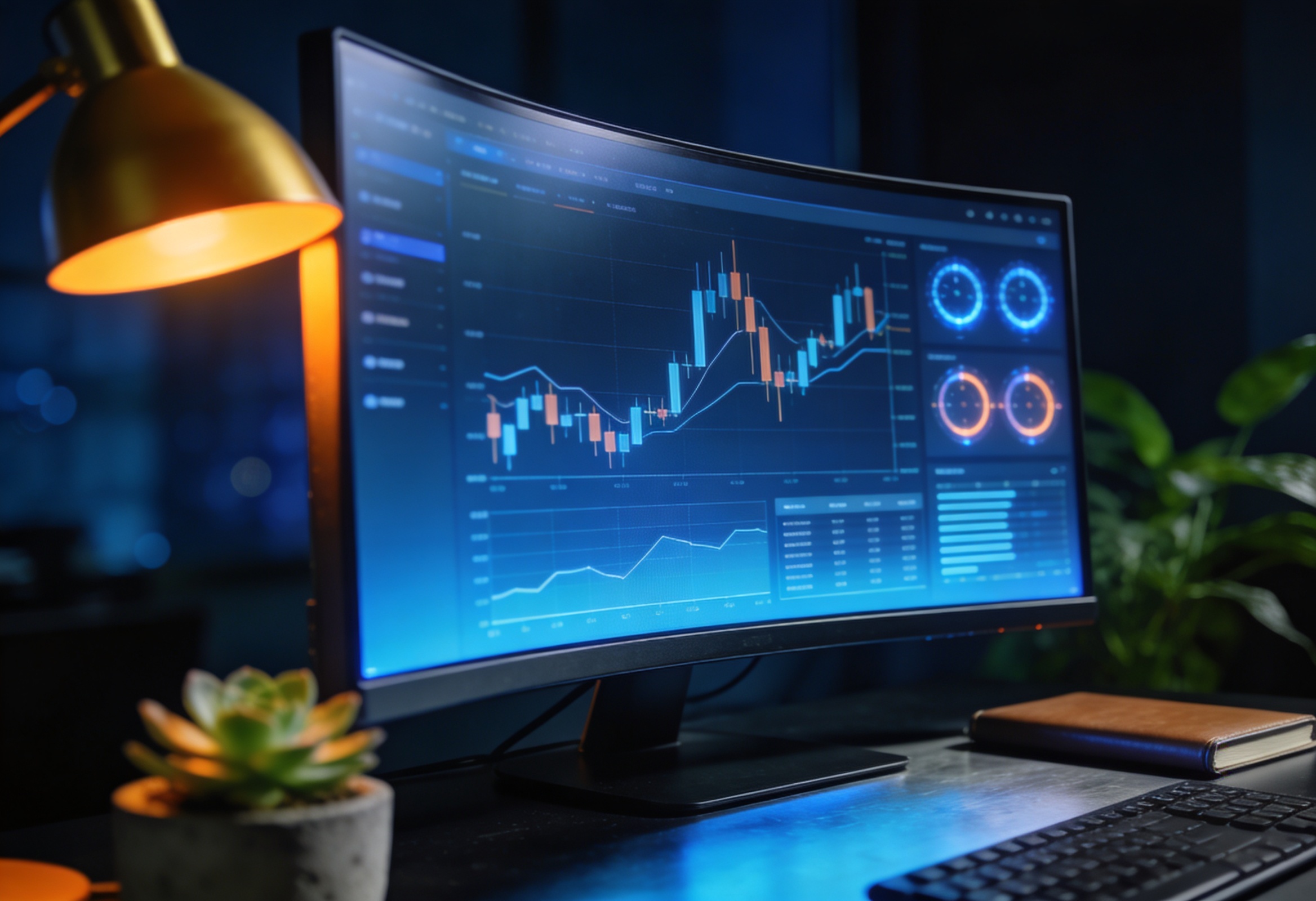
Behind a clean dashboard, an AI trading system moves through four broad stages. Understanding each one helps you judge where a platform’s real strengths — and its limitations — actually lie.
The engine continuously collects market data from exchanges and feeds. Prices, volumes and related signals are cleaned and standardised before any analysis begins.
Machine-learning models scan the prepared data for recurring relationships and statistical patterns, weighing many variables at once far faster than manual review.
When conditions match a model’s criteria, the system produces a candidate signal. Each signal carries an estimated probability, never a certainty, and is checked against risk rules.
Approved signals can be routed to a connected brokerage for execution within preset limits. Position sizing and stop rules are applied automatically to keep risk in check.
Most AI-assisted platforms share a common set of capabilities. None of them removes risk — but knowing what the tools offer helps you compare services on substance rather than marketing.
Continuously monitors multiple markets and instruments, surfacing conditions as they develop instead of long after the fact.
Test a rules-based approach against historical data before risking capital, helping you understand how it might have behaved in different conditions.
Set position limits, stop-losses and exposure caps so the system operates strictly within the boundaries you define.
Keeps allocations aligned with your chosen targets by adjusting positions automatically as markets move over time.
Receive notifications when specific thresholds, signals or risk levels are reached, so nothing important slips past you.
Clear, illustrative breakdowns of activity and outcomes help you review what happened and refine your understanding over time.
The strongest case for rules-based, AI-assisted decisioning is not speed alone — it is consistency. The same factors that make markets hard for people are the ones automated systems are designed to handle calmly.
Automation reduces certain human errors; it does not remove market risk. No system can guarantee a profit, and all trading carries the risk of loss.
Neither approach is inherently better — each suits different goals and temperaments. The table below contrasts how they typically differ across six practical criteria.
| Criteria | AI-Assisted Tools | Traditional Brokerage |
|---|---|---|
| Execution Speed | Near-instant, rules-based execution within preset limits | Depends on manual review and order placement |
| Emotional Bias | Minimised — decisions follow the configured logic | Higher — fear and greed can override a plan |
| Cost Structure | Spreads, subscription tiers and platform fees | Commissions, account fees and advisory charges |
| Transparency | Logic and parameters are visible, but models can be complex | Human rationale is clear, but discretionary and variable |
| Monitoring Hours | Continuous, including overnight sessions | Limited to when you or your advisor are available |
| Learning Curve | Steeper at first — setup, parameters and oversight | Familiar, with guidance from a licensed professional |
This comparison is general and educational. Specific platforms and brokerages vary widely; always verify the details and registration status of any service before using it.

A polished interface is not enough. Use this checklist to evaluate any AI trading platform on the factors that actually protect your capital and your data.
Regulation status. Confirm the provider is registered with the appropriate Canadian securities regulator.
Fee transparency. Look for a clear, full breakdown of spreads, commissions and subscription costs.
Security. Check for encryption, two-factor authentication and independent security audits.
Supported assets. Make sure the markets and instruments you care about are actually covered.
Customer support. Responsive, accessible help matters most when something goes wrong.
Track-record evidence. Favour verifiable, audited results over screenshots and bold claims.
Fees quietly shape long-term outcomes. AI trading platforms can charge in several overlapping ways, so it pays to read the fine print. The figures any platform shows are illustrative — confirm the real costs before funding an account.
The gap between buy and sell prices. Watch for wider spreads on volatile or thinly traded assets.
Per-trade charges that add up quickly with frequent, automated activity.
Monthly plans that unlock features. Check whether the tier you need justifies its cost.
Charges to move your own money out. Note minimums, processing times and currency costs.
Because trading platforms hold sensitive personal and financial information, security is non-negotiable. These five safeguards are the baseline to look for before you share any data.
End-to-end encryption. Data in transit and at rest should be protected with strong, modern encryption.
Two-factor authentication. An extra verification step makes stolen passwords far less useful to attackers.
Segregated funds. Client money kept separate from company funds is better protected if a provider fails.
Independent audits. Third-party reviews provide outside assurance that controls actually work.
Data minimization. Reputable platforms collect only what they need, reducing what could ever be exposed.

In Canada, securities are regulated province by province rather than by a single national body. Each provincial and territorial regulator — coordinated through the Canadian Securities Administrators — sets the rules for who may offer trading services and how they must treat investors.
For everyday investors, this framework matters because it determines whether a platform is actually permitted to serve you, what it must disclose, and where you can turn if something goes wrong. Registration is not a guarantee of performance, but it is a baseline signal of accountability.
Nexautotrade does not provide legal advice. Before using any AI trading platform, confirm its standing directly with your provincial securities regulator and review the official guidance they publish for retail investors.

Verify that a firm and its representatives are registered to deal in securities in your province before you fund an account.
Registered providers must disclose risks, fees and conflicts of interest, giving you the information needed to make an informed choice.
If a dispute arises, regulators and independent bodies offer formal channels to file complaints and seek resolution.
The figures below are illustrative, educational reference points about the broader market — not measurements of any platform’s results or a promise of returns.
Illustrative figure — not a performance promise.
Illustrative figure — not a performance promise.
Illustrative figure — not a performance promise.
Illustrative figure — not a performance promise.

“I almost signed up for an AI trading service on hype alone. This guide laid out the real risks and the questions to ask in plain English. I walked away far better informed — and a lot more cautious.”
Three short, plain-language explainers to deepen your understanding before you evaluate any platform.

Machine-learning models do not "predict the future." They are trained on large sets of historical market data, searching for statistical relationships that tended to repeat in the past.
During training, a model adjusts its internal parameters to reduce the gap between its guesses and what actually happened. The result is a system that recognises certain patterns quickly — but one that can also be wrong when conditions shift.
That is why understanding the limits of learning matters as much as the capability itself. A pattern that held yesterday is never guaranteed to hold tomorrow.

Position sizing — deciding how much to commit to any single trade — is one of the most important defences against large losses. Even a good strategy can be ruined by betting too much at once.
Many disciplined approaches risk only a small, fixed fraction of an account on each position, so that no single outcome can do serious damage. AI systems can enforce these limits automatically and without hesitation.
The goal is survival first, growth second. Capital that is preserved can keep working; capital that is lost cannot.
Markets produce endless data, and not all of it is meaningful. A single sharp move can be noise rather than a true change in direction, and reacting to every wobble tends to increase costs and mistakes.
Rules-based systems help by acting only when predefined conditions are met, filtering out the emotional impulse to do something at every flicker of the chart.
For human investors, the lesson is similar: define what matters in advance, and let the rest pass by.
Straightforward answers to what Canadian investors ask most about AI trading platforms.
Yes. Using automated or AI-assisted trading tools is legal in Canada, provided the platform offering securities-related services is properly registered with the relevant provincial securities regulator. Always confirm a provider’s registration before signing up.
There is no universal figure, and you should never invest money you cannot afford to lose. Minimums vary by platform. More important than the amount is treating any capital as genuinely at risk and starting only with what your circumstances comfortably allow.
They can be, but automation does not remove the need to understand what you are doing. Beginners benefit most from learning the fundamentals first, starting small, and using a platform’s educational and risk-control features before committing meaningful capital.
Spreads, commissions, subscription tiers and withdrawal fees can each erode returns, and frequent automated trading can multiply per-trade costs. Read the full fee schedule and estimate the total cost of your expected activity, not just the headline rate.
Reputable platforms protect data with strong encryption, two-factor authentication, segregated client funds, independent security audits and data minimization. Confirm which of these safeguards a provider offers before sharing personal or financial information.
No tool can guarantee profits, and any service promising them should be treated with caution. AI can add consistency and discipline, but markets remain uncertain, losses are always possible, and past performance never guarantees future results.
This website and all of its content are published by Nexautotrade for general educational and informational purposes only. The material is presented as advertorial, sponsored content and must not be interpreted as financial, investment, legal or tax advice, nor as a recommendation, offer or solicitation to buy, sell or hold any security, derivative, financial product or trading platform.
Nexautotrade is not a registered investment dealer, brokerage, portfolio manager or financial adviser. We do not execute trades, hold or manage client funds, or provide personalised advice. Any names, figures, statistics or scenarios shown on this site are illustrative examples only; they are not real results and do not represent the performance of any specific platform, strategy or account.
All forms of trading and investing involve substantial risk, including the risk of losing your entire investment. Automated and AI-assisted tools do not eliminate this risk. Past performance never guarantees future results. Before making any financial decision or using any trading platform, you should conduct your own research, verify the provider’s registration with the appropriate Canadian securities regulator, and consult a qualified, licensed financial professional.
Final Thought
Technology. Discipline. Advantage.
Send us your details and we’ll email you the complete educational guide to AI trading for Canadian investors. Have a question first? Write it in the message field and our editorial team will reply.
Prefer email?
info@nexauttrade.com